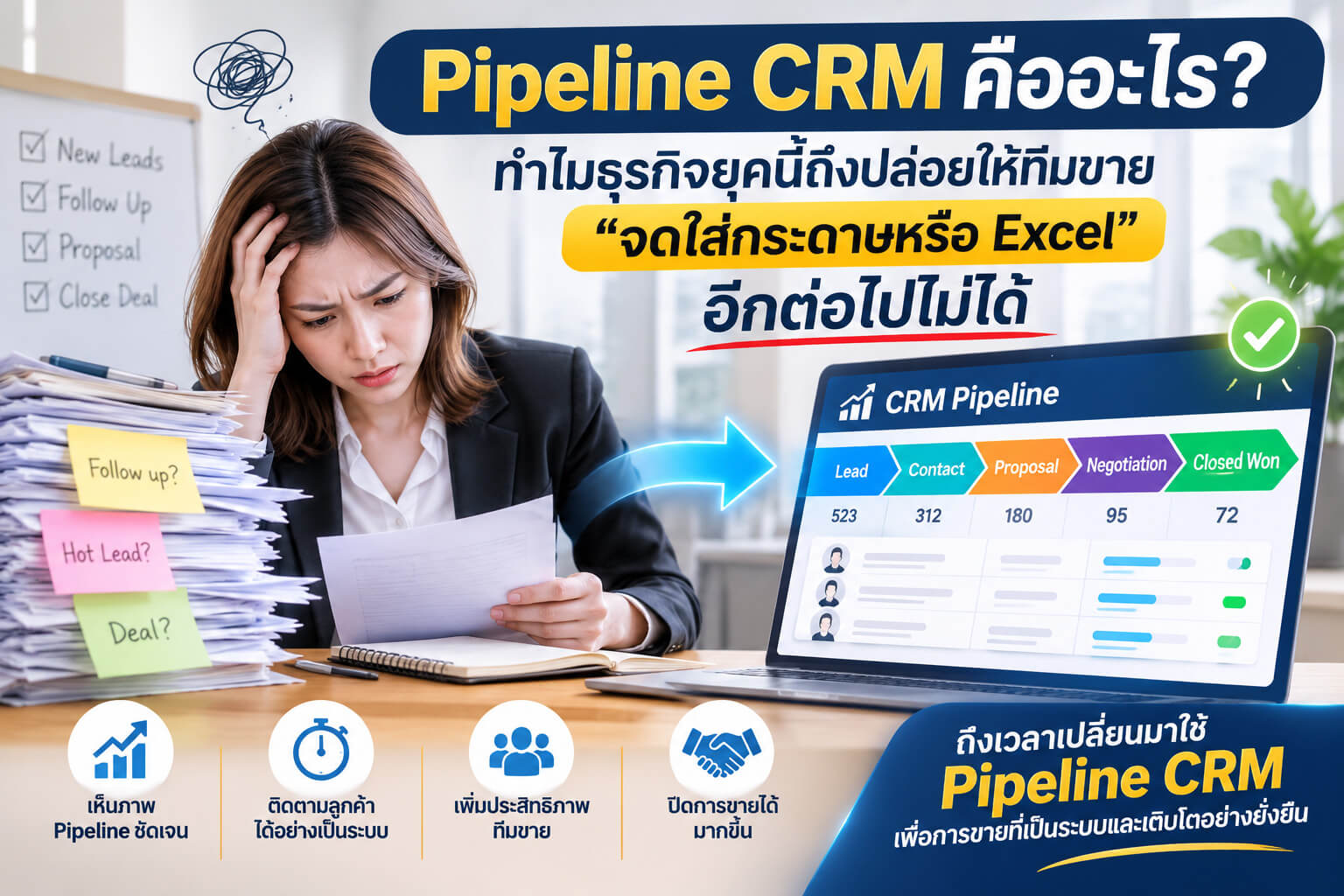

In today’s business world, the winner is often the one who can engage with customers the fastest, provide the most comprehensive information, and close sales most effectively. Yet, in many organizations, the reality behind the scenes looks quite different: stacks of paper notebooks, fragmented Excel spreadsheets—with files often named something like “Customer_List_Latest_v5.xlsx”—or computer screens plastered with sticky notes.
While managing sales processes is always important, modern businesses face unique challenges—such as significant “leaks” in the sales funnel that cause potential revenue to slip away. This article explores the concept of a **Sales Pipeline CRM** and explains why transitioning to a digital system is crucial for survival and maintaining a competitive edge in sales.
What is a Sales Pipeline CRM?
A **Sales Pipeline CRM** is a system designed to manage the entire sales journey—from the moment a customer first discovers the brand or makes an inquiry, all the way to the final sale. It maps out the entire process into distinct **”Sales Stages,”** typically visualized on a board (often a Kanban-style board, where “cards” representing individual leads or deals can be moved from one stage to the next).
Think of it as an assembly line for your sales process. Transform your chaotic sales process into a streamlined, efficient workflow. Gain real-time visibility into every deal—track exactly which stage each prospect is in and who is responsible for managing it.
5 Key Stages Every Business Needs in Its Sales Pipeline
To ensure clarity within your CRM sales pipeline, consider these 5 essential stages:
- Lead Generation / Inbound: Begin by gathering a list of interested prospects from various channels—such as website forms, social media advertisements, direct chat inquiries, or interactions at events.
- Contact & Qualification: Your sales team reaches out to engage with the prospect and assess their “qualification”—determining whether they have the budget, a genuine need, and fit your target audience profile. This prevents wasting time on leads who are not ready to buy.
- Proposal / Demonstration: Present a tailored solution or a product demonstration specifically designed to address the unique needs of that prospect.
- Negotiation: Engage in discussions regarding pricing, terms, conditions, or contractual requirements.
Sometimes, this may occur during a meeting.
- Closed Won / Closed Lost: The final stage that determines the outcome.
- Closed Won means the sale was successfully concluded or payment was received.
- Closed Lost refers to a deal that fell through or did not result in a purchase. The reason for the loss is recorded (e.g., price too high, a competitor won the contract, or the project was delayed) to facilitate future analysis and improvement.
Why are Excel or paper-based records no longer sufficient for modern businesses?
Many might ask, “Since Excel is free, why invest in a CRM system?” Let’s consider a few points:
- Fragmented and outdated data: When different salespeople maintain their own separate files, team leaders or executives cannot access a real-time, comprehensive view of total sales.
- Tracking and managing customer lists:
If a salesperson resigns, the history of meetings and communications often leaves with them, forcing clients to repeat their issues and background to a new representative.
- Lack of automated reminders: Excel does not provide alerts—such as “Call Client A today”—which often leads to missed opportunities to close sales.
- Difficulty in sales forecasting: Projecting future revenue using Excel files is often highly inaccurate, as the software lacks the necessary tools to analyze deal progression and win rates at each stage of the sales process.
Scaling for Growth with a Standardized System
Moving beyond manual record-keeping Transforming traditional data-driven processes to Pipeline CRM isn’t just about switching from paper-based work tools to computer screens; it’s about elevating the “sales team’s work culture” to be data-driven. This helps organizations identify sales bottlenecks, plan cash flow management accurately, and enables sales teams to work more systematically.
When your back-end sales processes are strong, opportunities to close deals and achieve sustainable business growth are within reach.